
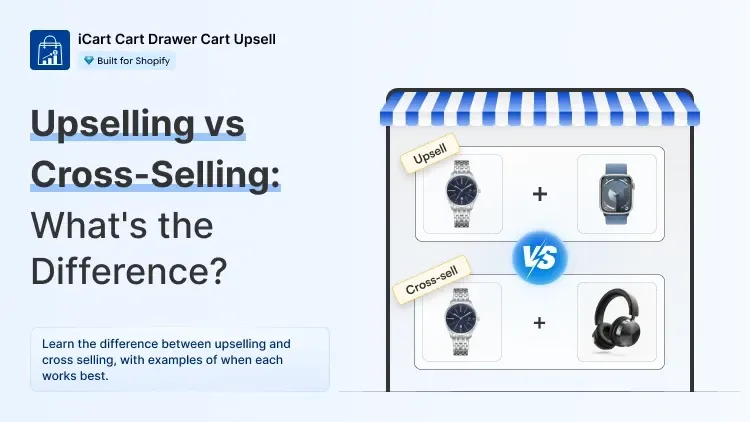
Being a Shopify store owner, you might have probably heard about upselling and cross selling a lot. But most people don’t know the difference between these two strategies. All they consider this to be a tool for making more revenue out of each order.
But here’s the truth of upselling vs cross selling. Both tactics can help you earn more money, but both work in different ways. And if you implement any of them at the wrong time in a wrong way, that can annoy your customer.
So, in this guide, you will learn the core difference between upselling and cross selling with examples.
What is upselling?
Upselling is a sales technique where a seller motivates the customer to buy an expensive product or an upgraded version of the product or service they originally intended to buy or added to their shopping cart.
For example, imagine a customer has added an 8GB pendrive to the cart, but the store suggested a 16 GB pendrive with some discount. So here if the customer is convinced and buy that 16 GB pendrive, then the store owner has made double revenue, and at the same time the customer has got better version with a good offer.
The main goal of upselling is to provide a better value to the customer while increasing the seller’s overall average order value & revenue.
Benefits of upselling in your Shopify Store
Upselling is not just about making more money. It actually helps both you and your customer.
Here's how.
You Make More Money Per Sale You already got the customer to your store. They're ready to buy. Upselling just helps them spend a little more without you spending extra on ads or traffic.
Your Customer Gets a Better Deal Done right, upselling doesn't feel pushy. It feels helpful. You're showing them a better product that solves their problem more effectively.
It Builds Trust When you recommend something genuinely better, not just more expensive, customers start to trust your store. They feel like you're on their side.
Your Average Order Value Goes Up
AOV is one of the most important numbers in ecommerce. Upselling bumps it up without needing more traffic or more ad spend.
Upselling Examples
1. Buy More, Save More Upsell
A BOGO upsell encourages customers to purchase more quantity of the same product. This works best for products that customers use regularly, such as skincare, food, supplements, socks, candles, or cleaning products.
Example:
If a customer adds one bottle of shampoo to the cart, you can show an offer like:
Buy 2 and save 10% Buy 3 and save 15%
This gives customers a reason to increase their quantity.
2. Subscription Upsell
A subscription upsell works well for products customers need again and again. It helps stores get repeat orders while giving customers convenience.
Example:
If a customer buys coffee, protein powder, pet food, or face serum, you can offer:
Subscribe and save 10% every month
This makes the customer feel they are saving money in the long run.
3. Use Cart Drawer Upsells to Increase Order Value
Many customers decide whether to buy more after adding a product to the cart. That is why the cart drawer is a good place to show upsell offers without disturbing the shopping journey.
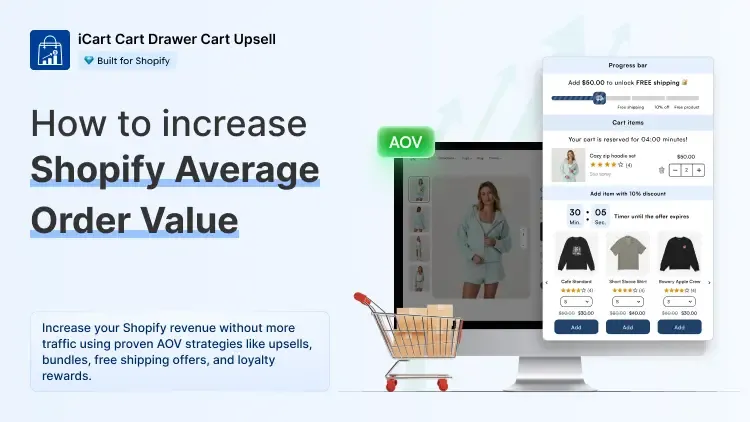
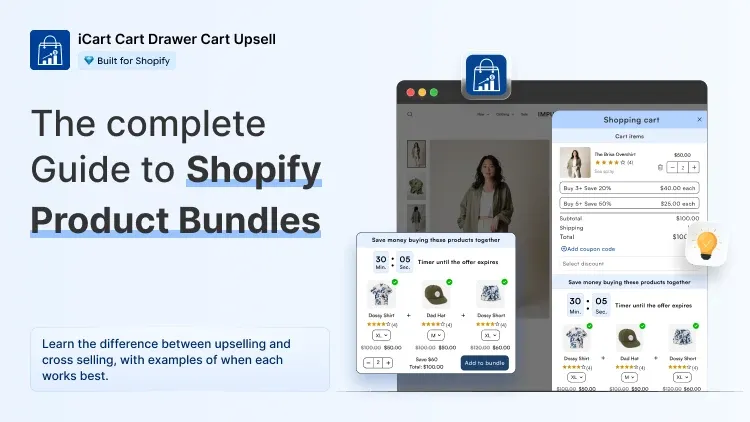
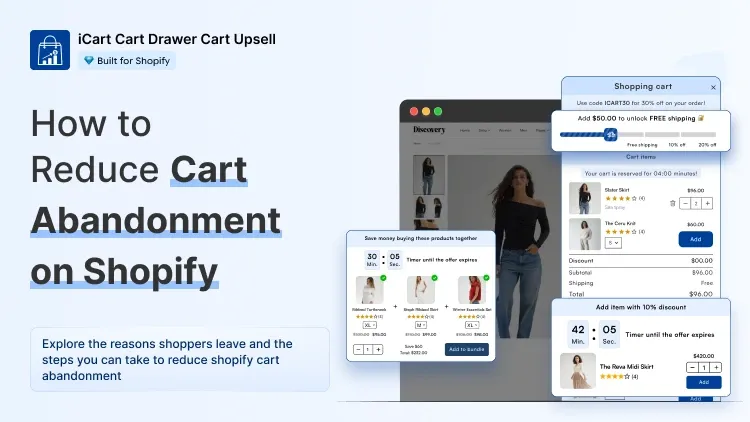
With iCart Cart Drawer Cart Upsell, Shopify merchants can create different upsell offers inside the cart drawer. You can show product recommendations, free shipping progress bars, bundle offers, BOGO deals, and discount offers.
4. Limited-Time Cart Offer
A limited-time cart offer creates urgency when the customer is close to checkout. It works best when the offer is simple and easy to understand.
Example: When a customer opens the cart drawer, you can show: Add this product now and get 20% off before checkout
5. Free Shipping Progress Bar Upsell
A free shipping progress bar shows customers how much more they need to spend to unlock free shipping. This is one of the easiest ways to increase cart value.
Example:
If the free shipping limit is ₹2,000 and the customer’s cart value is ₹1,500, you can show: You are ₹500 away from free shipping Then you can suggest products around ₹500.
What is cross selling?
Now let’s understand what is cross selling.
Cross selling means suggesting related or complementary products along with the product the customer is buying.
The customer buys one product. You suggest another product that goes well with it.
Example of Cross Selling
A customer buys a mobile phone. You suggest a phone case, screen protector, and charger. That is cross selling.
Upsell vs Cross Sell: Which One Works Better?
The answer depends on your product and customer journey.
When comparing upsell vs cross sell, upselling works better when the customer can clearly see more value in the upgraded product.
Cross selling works better when the extra product is useful and directly related to the main product.
When Upselling Works Better
Upselling works well when:
- You sell products with different sizes
- You sell basic and premium versions
- You sell plans or packages
- You sell electronics, beauty, fashion, or software products
- The better product has clear benefits
Example
A customer adds a basic skincare kit to the cart.
You show a premium skincare kit with serum, moisturizer, and sunscreen.
This works because the customer already wants skincare products. You are simply showing a better option.
This is why understanding upsell vs cross sell is important before creating offers.
When Cross Selling Works Better
Cross selling works well when:
- The main product needs accessories
- Customers may forget useful add-ons
- You sell products that go together
- You want to increase the number of items in the cart
- You want to offer bundles
Example
A customer buys running shoes.
You suggest socks, shoe cleaner, or a gym bag.
This feels natural because the products are related.
When comparing upsell vs cross sell, cross selling is often easier for smaller add-on products.
Conclusion
Understanding upselling vs cross selling helps you create better offers for your Shopify store.
Upselling helps customers choose a better version. Cross selling helps customers add related products.
The difference between upsell vs cross sell is simple, but both can increase your average order value when used correctly.