
Getting customers to buy more without forcing them to spend more is one of the biggest challenges for Shopify merchants. Paid ads are getting expensive, discounts can reduce margins, and shoppers often leave after buying only one product. This is where a Shopify product bundle can make a real difference.
A product bundle is a simple offer where two or more products are grouped together and sold as one deal. It could be a skincare routine, a laptop with accessories, a jewelry gift set, a coffee starter kit, or a “complete the look” fashion bundle. Instead of pushing random products, bundles help customers see what goes well together and make a faster buying decision.
In this guide, we will cover what product bundles are, why they work, different bundle types, how to create them, mistakes to avoid, and how a Shopify bundle app like iCart can help you display bundles naturally inside the cart.
What Is a Product Bundle in Shopify?
A product bundle in Shopify is a group of two or more products sold together as a single offer. The bundle may include a fixed discount, a percentage discount, a special bundle price, or simply the convenience of buying related products together.
The main goal of a Shopify product bundle is to make the next purchase decision easier. Instead of asking customers to browse the entire store, you show them a ready-made combination that solves a need.
This is why bundling works well for both new and returning customers. New customers get guidance, while returning customers discover more products from your catalog.
Common Types of Shopify Product Bundles
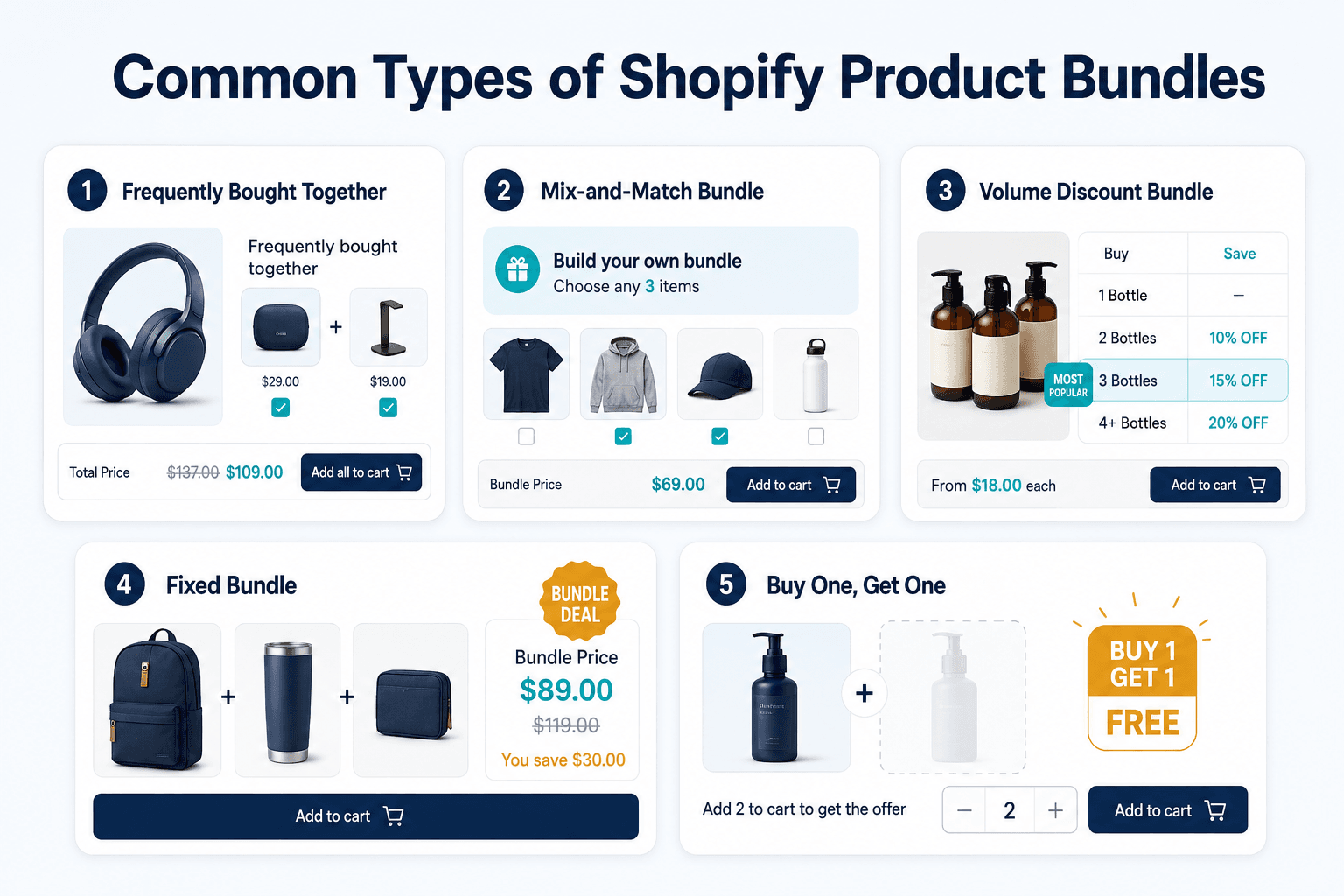
There are different ways to use bundles depending on your store type, margins, and customer behavior. Choosing the right bundle format matters because not every bundle works for every product.
1. Fixed Product Bundle
A fixed bundle includes a set group of products that customers buy together. They cannot change the items. Example: “Morning Skincare Kit” with cleanser, toner, and sunscreen. This works best for products that naturally belong together.
2. Mix-and-Match Bundle
A mix-and-match bundle lets customers choose products from a selected group. Example: “Choose any 3 candles and save 15%.” This gives customers more control and works well for stores with multiple variants, flavors, colors, or styles.
3. Frequently Bought Together Bundle
This bundle is based on products customers often buy together. Example: A camera product page showing memory card, tripod, and camera bag as add-ons.
This type of product bundle shopify strategy works well because it feels relevant, not pushy.
4. Volume Discount Bundle
A volume bundle rewards customers for buying more quantity. Example: “Buy 2, save 10%. Buy 3, save 15%.” This is useful for consumables like supplements, snacks, cosmetics, pet food, and household items.
5. Gift Bundle
Gift bundles are curated sets designed for occasions. Example: “Mother’s Day Self-Care Gift Box” or “Holiday Coffee Hamper.” These bundles work well during seasonal campaigns, festivals, holidays, and gifting periods.
6. Starter Kit Bundle
Starter kits are perfect for new customers. Example: “Beginner Makeup Kit” or “New Dog Parent Essentials.” This format helps customers who are unsure what to buy first.
7. Cart-Based Bundle
A cart-based bundle appears when the customer is already shopping or has added something to the cart. This is where apps like iCart become useful.
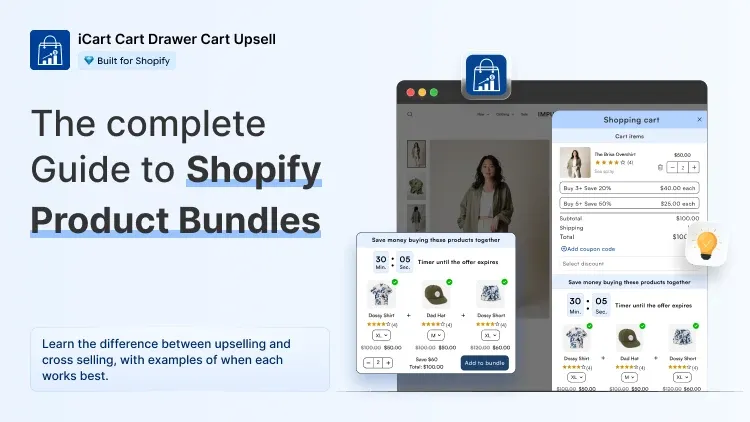
Instead of showing the bundle only on the product page, iCart lets merchants display product bundles inside the cart drawer, cart popup, or full cart page. This makes the offer visible at a high-intent moment, when the customer is already close to checkout.
Why Product Bundles Work for Shopify Stores
Product bundles work because they combine value, convenience, and relevance. Customers do not always want the cheapest option. Many times, they want the easiest and most useful option.
Here are the biggest reasons bundles work:
1. They Increase Average Order Value
If a customer plans to buy one product but sees a relevant bundle, they may add two or three products instead. This increases the order value without needing more traffic. For example, a customer buying shampoo may also need conditioner and a hair mask. A bundle makes that decision simple.
2. They Make Shopping Easier
Too many choices can confuse customers. A bundle reduces decision fatigue by showing a complete set. This is especially useful for skincare, fashion, gifting, supplements, electronics, and home decor stores.
3. They Help Move Slow-Moving Products
If you have products that are not selling fast, you can bundle them with bestsellers. This gives those products more visibility without making them look like clearance stock.
4. They Improve Product Discovery
Many customers may not know your full product range. Bundles introduce them to complementary items they may not have found on their own.
5. They Create a Better Perceived Deal
Even a small discount can feel more valuable when products are grouped together. Customers feel they are getting a complete solution at a better price.
How to Create Product Bundles on Shopify
There are different ways to create bundles depending on your store’s needs.
Option 1: Use Shopify Bundles
Shopify has its own Bundles app for fixed bundles and multipacks. This can work for merchants who want a simple bundle setup inside Shopify admin. However, if you want more control over where bundles appear, how they look in the cart, or how they work as upsell offers, you may need a more flexible shopify bundle app.
Option 2: Use a Product Bundle Shopify App
A dedicated product bundle shopify app like iCart Cart Drawer Cart Upsell gives you more options for bundle layout, discounts, cart placement, product recommendations, and targeting rules. With iCart’s Product Bundle widget, you can show related products directly in the cart drawer, cart popup, or full cart page.
This is useful when you want bundles to work as part of your conversion strategy instead of just creating a bundled product page.
How to Choose Products for a Bundle
The success of any shopify product bundle depends on product selection. Random combinations rarely work. Customers should immediately understand why the products belong together.
Use these rules when choosing bundle items:
Choose Complementary Products
Bundle products that are used together. A phone case with a screen protector makes sense. A moisturizer with sunscreen makes sense. A T-shirt with a random kitchen tool does not.
Use Purchase Data
Check your Shopify analytics and order history. Look for products frequently purchased together. These are strong bundle candidates because customers already show buying intent.
Pair Bestseller + Discovery Product
Take one popular product and pair it with a lesser-known but relevant product. This improves product discovery and helps move inventory.
Keep the Bundle Simple
Do not overload the bundle with too many items. A bundle with 2 or 3 strong products often performs better than a large bundle that feels expensive or confusing.
Match the Customer’s Goal
A good bundle should solve a clear need. Examples:
- “Complete skincare routine”
- “Work-from-home desk setup”
- “Weekend travel kit”
- “Newborn baby essentials”
- “Gym starter pack”
When the goal is clear, the customer understands the value faster.
Final Thoughts
A good shopify product bundle is not just a group of discounted products. It is a curated buying shortcut. It helps customers find related items, understand the value faster, and complete their purchase with more confidence.
The key is to keep bundles relevant, simple, profitable, and easy to add to cart. Start with your best-selling products, pair them with useful complementary items, test 2 or 3-product bundles, and track performance regularly.
For Shopify merchants, product bundling is one of the simplest ways to increase order value without depending only on more traffic or bigger discounts.